
FOCUS: Cadastral Income, Property Tax and Personal Income Tax
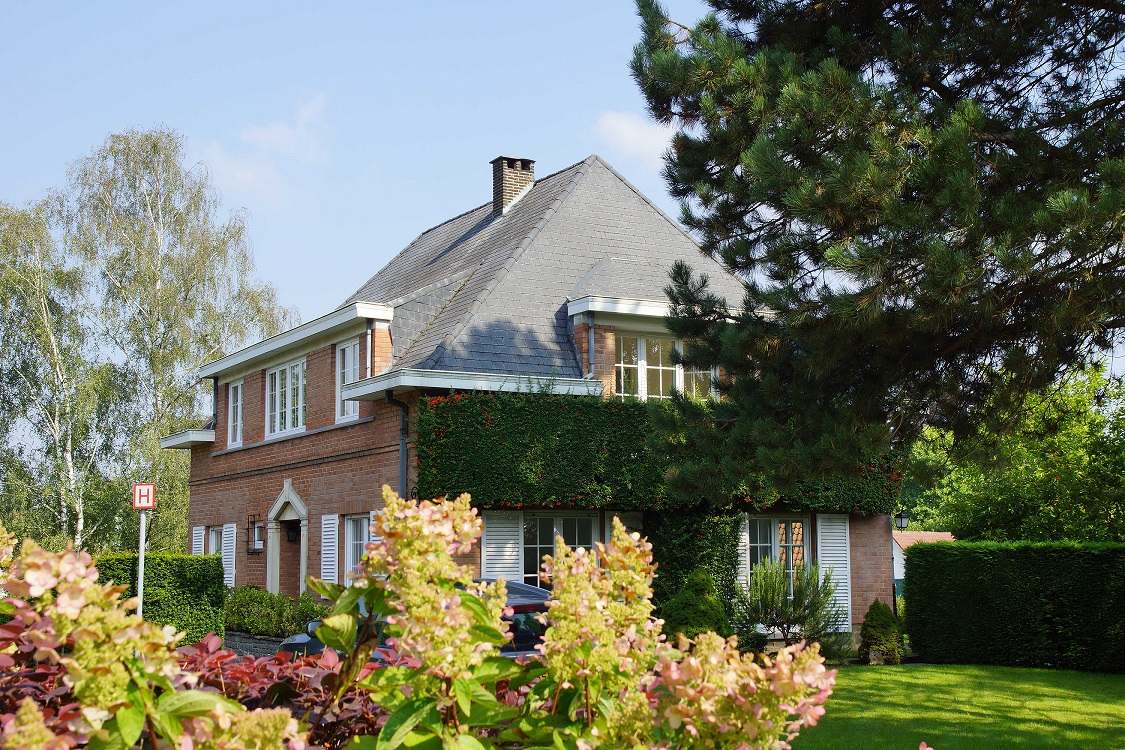
If you are a property owner, it is important to understand certain terms, particularly when they affect your income! That is why, in this article, we take the time to explain cadastral income, the calculation of property tax and personal income tax in detail.
1. Cadastral income
What is it?
Cadastral income is the net income that your property would generate in one year if you rented it out. Cadastral income is calculated based on the property's rental value as at 1/01/1975.
Cadastral income is index-linked each year. To give you an idea, the indexation coefficient for 2017 was 1,7491.
How is it calculated?
Rental value (1975 basis) x 12 (annual rental value) – 40% expenses = Net Cadastral Income
Net cadastral income x indexation coefficient for the tax year = Net Cadastral Income Indexed
Cadastral income is the starting point for calculating property tax, which is a REGIONAL tax on property.
2. Property tax
Property tax is paid annually and is calculated as follows:
Property tax = 1,25% of Net Indexed Cadastral Income
Please note that property tax will ultimately account for only a small portion of the tax you pay, as urban areas and municipalities are entitled to increase this Regional Tax in the form of additional surcharges (which are voted on each year and vary between municipalities and urban areas/provinces).
A simple example:
The net indexed cadastral income of my property is 1000€. My property is located in the Brussels urban area, in the municipality of Woluwé-Saint-Pierre:
My property tax = 1000 x 1,25% = 1000 x 0,0125 = 12,5 €
Additional surcharges
- Brussels urban area = 989 cents = for each euro of property tax, you will pay an additional 989 cents (=9,89€)
9,89 x 12,5 = 123,62 €
- Municipality of Woluwé-Saint-Pierre = 2200 cents = for each euro of property tax, you will pay an additional 2200 cents (22€)
22 x 12,5 = 275 €
Therefore, in total, you will pay 12,5 +123,62 + 275 = 410,87€
> There is no need to perform this complicated calculation: for a rough estimate, divide the indexed cadastral income by two.
Property Tax Reduction
Certain circumstances entitle you to a reduction in property tax (the reduction for modest homes, number of dependent children, a person with a disability, a listed property,…)
The property tax reduction is sometimes linked to the occupant of the property. Therefore, if your tenant entitles you to a property tax reduction, you must deduct the amount saved from the rent (only once a year).
As Property Tax has increased in the Brussels-Capital Region since 2016, a grant has been introduced for owners who live in their property. This grant, the Be Home grant, amounts to 120€.
Who pays the property tax when a property is sold?
It is payable by the owner of the property on 1 January of the tax year. Therefore, if you sell your property on 1 April 2017, for example, but were the owner on 1 January 2017, you will still be liable for the full property tax. However, it is possible to specify at the time of sale that the parties will pay the property tax on a pro rata temporis basis. The seller will therefore pay the full property tax, as they alone are liable to the tax authorities, but the buyer will reimburse them for the agreed portion.
3. Property Income – Personal Income Tax
In the case of a rental for private use (the most common scenario):
The tax is calculated on the basis of the indexed net cadastral income, increased by 40%
Using our example, this would therefore be 1000 x 1.4 = €1400
The tax depends on your income. Assuming that you earn a good living, it will be approximately 50%, so 0.5 x 1400 = €700, to which the additional municipal taxes must also be added.
What if I occupy my property myself?
Generally, you are exempt from tax if you occupy your property yourself (this does not apply to property tax, which is always payable)
However, always take a look at the FPS Finance website to make sure.
4. Building work and cadastral income
Two types of building work have an impact on your property's cadastral income.
Firstly, if you increase the living area of your property, for example by converting an attic into habitable space, your cadastral income will be revised upwards.
Your cadastral income will also increase following work that improves the comfort of your property, such as installing a bathroom or central heating.
However, energy-efficiency improvements do not affect cadastral income.
Please note that you are legally required to notify the Land Registry of any work exceeding €50 or 15% of the cadastral income.
Today, many ‘modest’ homes (with cadastral income below €745), which qualify for reduced registration duties and property tax, have undergone undeclared improvements over the years. This is why, for the past few months, in the event of a sale, FPS Finance has systematically checked the cadastral income of modest homes.
J&J Properties
A question or a property project?
Our team supports you from advice to signing.