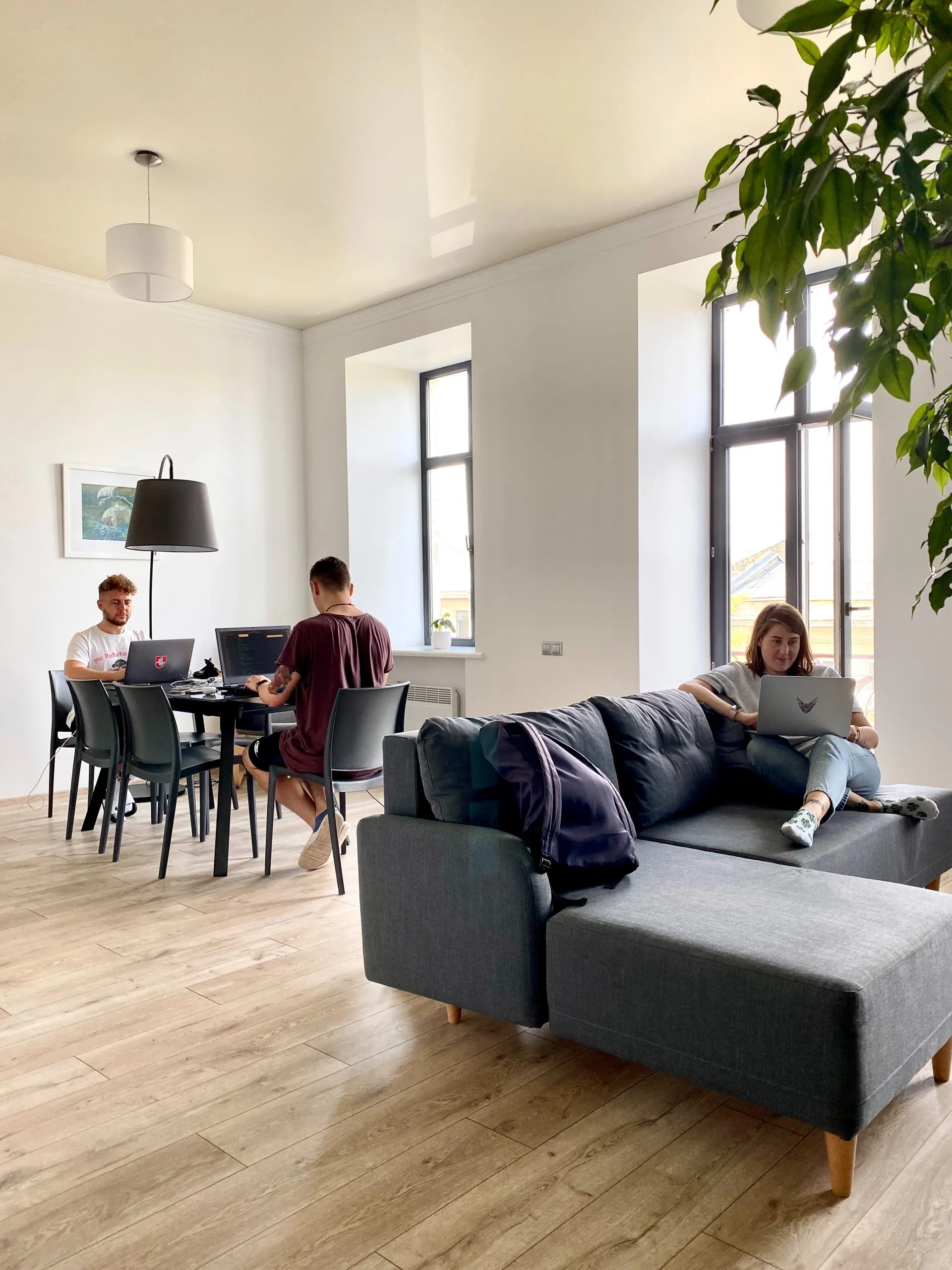
Could coliving in the Brussels region be a source of speculation? It is a valid question, particularly given the success of this type of rental.
What is coliving?
Coliving is a concept imported from the United States and the United Kingdom. It is a form of house-sharing involving a large number of tenants (between 8 and 20). The housemates are generally young, whether young professionals or students. They are also often individuals looking to build a network, find more affordable accommodation or avoid living alone. In addition to the large number of tenants, this rental model provides them with a maintenance service that can respond when problems arise. Furthermore, the rooms are rented through specialist platforms or individuals, which adds to the professional nature of the arrangement.
This type of accommodation is becoming increasingly widespread in major cities such as Brussels. It is an effective way to keep costs down while living in high-end furnished properties, generally located in sought-after neighbourhoods. Furthermore, rooms in shared properties allow people staying for a short period (3 months to 1 year) to avoid making a long-term commitment. This allows them to pay rent only for the duration of their stay, without having to commit to a year or more. Today, this type of accommodation can be found throughout the Brussels region.
The speculation surrounding it…
However, the rise of this new concept is now giving rise to speculation.
This speculation concerns property and/or finance.
From a property perspective, the prospect of letting a property under the coliving model can be attractive. There are good reasons why it works so well. Landlords who let properties in this way anticipate changes in property market prices. They know that they will make a greater or lesser profit on their original purchase. It is therefore a way of securing a constant or nearly constant income. This is why increasing numbers of people are buying properties to convert them into shared accommodation.
From a financial perspective, the issue concerns rents. Today, rents in coliving properties are much higher than in traditional shared accommodation. Prices for a room are estimated to range between 600 and 1200€. However, this does not appear to be a deterrent. Landlords and the companies managing these properties are therefore taking advantage of the situation. It is a cycle that repeats endlessly and continues to work extremely well. However, coliving prices continue to rise.
Coliving is therefore a form of accommodation offering many advantages, from maintenance services to the opportunity to make new contacts. It is also profitable for the landlord, who quickly earns a return on their purchase.
J&J Properties
A question or a property project?
Our team supports you from advice to signing.